
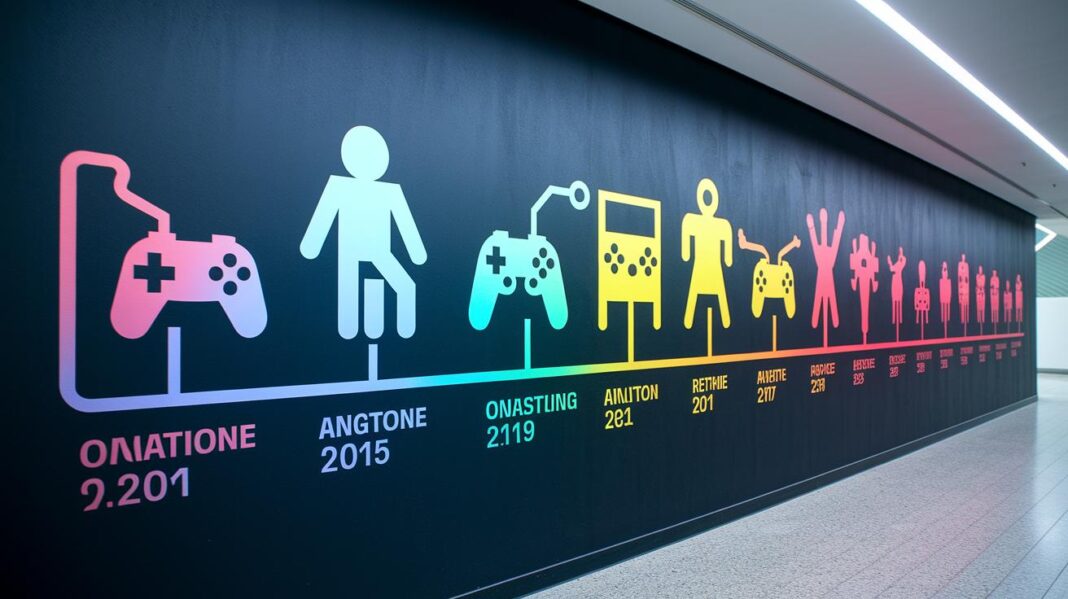

Ever wonder how game updates went from tiny fixes to the cool patches we see now? Back in the early days, games had code that could not be changed. Now, they’re like living worlds that keep getting better.
In this post, we’re digging into the big moments when small tweaks turned plain screens into lively, fun experiences. Think of it like upgrading your favorite game, each update adds something new that keeps the fun rolling.
Stick around as we walk through this exciting evolution in video game updates.
Historical video game update timeline: Bold Evolution
Back in the 1950s and 1960s, video games were nothing more than lab experiments with fixed programs. Picture a game that, if something went wrong, could never be fixed. That was the way it was. Then in 1971, Computer Space made its debut in arcades. Its firmware was set before anyone ever played it, marking the start of commercial gaming.
By the mid-1970s, things got a little cooler. Cartridges, like those used in the Magnavox Odyssey, let players swap out game media to change the gameplay. Think about it: swapping a cartridge was as close to an update as it got back then. In the early 1980s, arcade games and home consoles like the Atari 2600 became huge, and hardware tweaks started taking the place of what we now call software patches.
Then, in the late 1980s, the friendly rivalry between Nintendo and Sega brought in regional restrictions and even some ROM updates with new releases. This period laid the groundwork for the way games could eventually be updated. The 1990s introduced CD-based titles on the PlayStation, where a little on-disc bug fix in a reprinted CD could change the game experience. It’s wild to think that a CD reissue might have small improvements that tweaked the way you played.
The 2000s brought big changes with broadband internet, letting PC and console games get patches and online multiplayer updates. Digital downloads started to reshape what a “release date” meant. Finally, the 2010s and 2020s saw day-one patches via platforms like Steam, and around 2019–2020, cloud gaming services began handling updates on the server side.
| Era | Update Milestone |
|---|---|
| 1950s–1960s | Lab experiments; no patch fixes |
| 1971 | Computer Space in arcades; pre-release firmware fixes |
| Mid-1970s | Cartridge systems like Odyssey letting you swap media |
| Early 1980s | Arcade boom and home consoles with hardware tweaks |
| Late 1980s | Nintendo vs Sega; regional lockouts and ROM updates |
| 1990s | CD-ROM fixes via reprints |
| 2000s | Online patches and multiplayer updates |
| 2010s–2020s | Day-one patches and cloud-managed updates |
Retro Patch Milestones in Classic Gaming Update Timeline
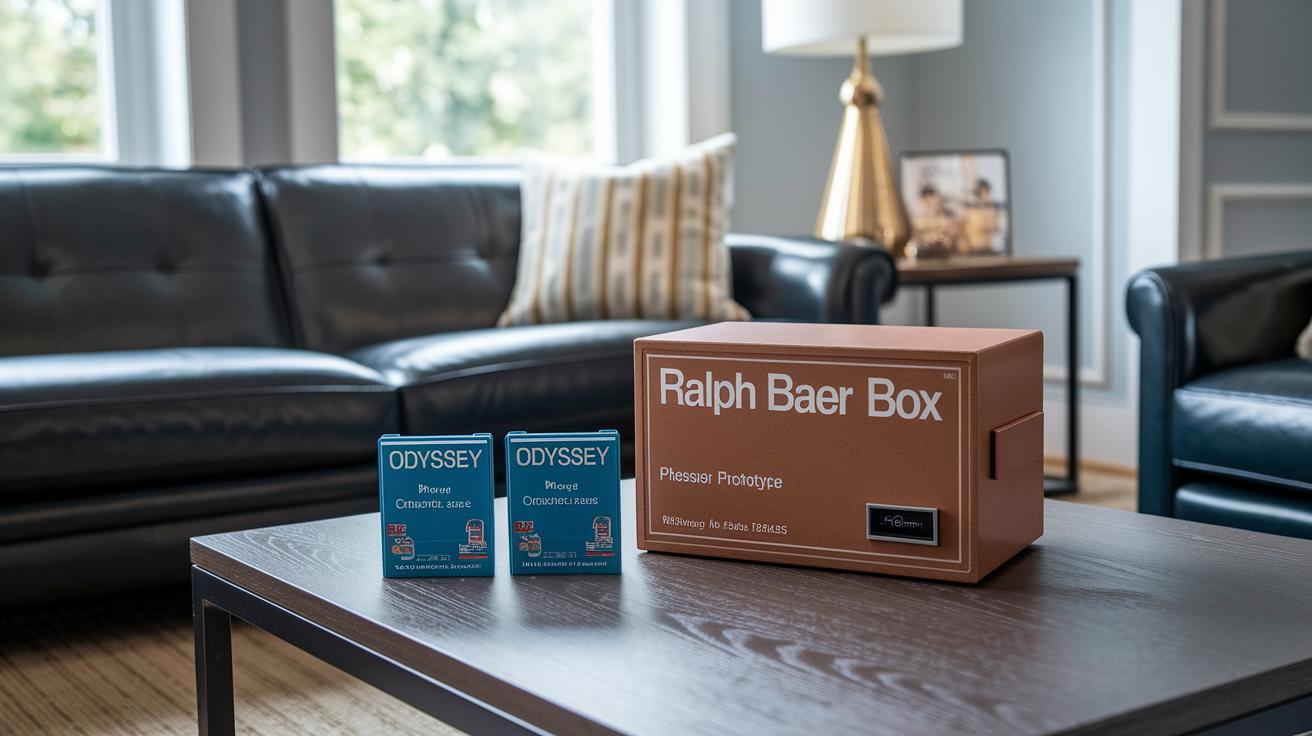
Back in 1967, Ralph Baer showed us his Brown Box prototype, hinting that game media could eventually be swapped out. It was a humble start, a bit like the first game patch where you could update by simply changing parts.
Then in 1971, Computer Space hit the scene with a game that had a fixed program. It didn’t let you tweak things mid-play, but its solid design laid the groundwork for smoother gaming later on.
From 1972 to 1975, the Magnavox Odyssey really shook things up by introducing interchangeable game cartridges. Swapping out a cartridge would change the whole game, almost like a basic update system that bridged early hardware ideas with fresh features.
By 1977, the Atari 2600 was stepping things up. It kept adding new cartridges and later even had firmware tweaks, infusing games with exciting, new elements.
In 1983, Nintendo’s Famicom took it further by using game ROM chips. This allowed them to release revised versions and fix bugs after the game left the factory, much like a post-launch patch.
Hey, fun fact: Before becoming a world-renowned scientist, Marie Curie used to carry test tubes of radioactive material in her pockets. Wild, huh?
Evolution of Software Release Chronology in Video Game Update Timeline
Back in the 1990s, developers used CD-ROMs to share bug fixes with every new disc print. Day-one patches came through dial-up, turning a one-off release date into the start of ongoing game improvements. Imagine powering up your console and noticing an update had already smoothed out that annoying glitch before you began playing.
In the early 2000s, platforms like Xbox Live and PlayStation Network stepped in with regular patch rollouts. Consoles could update games on the fly, so you’d jump right into a game that felt more polished from the get-go.
By the mid-2010s, digital storefronts like Steam and the PlayStation Store made auto-updating the new norm. Games started fixing themselves behind the scenes, letting players enjoy a smoother experience without the hassle of manual updates.
Between 2019 and 2020, patch management moved to the cloud with services like Google Stadia and GeForce Now. Updates ran on remote servers, which meant gamers could dive into the action without waiting around for downloads.
No Man's Sky in the Historical Video Game Update Timeline

When No Man’s Sky first burst onto the scene, it left many players more shocked than excited. A lot of gamers were disappointed because the game didn’t live up to its grand promises. Early on, players ran into performance issues and missing features. One gamer even said it felt like starting with a blank canvas, which really summed up the mood back then.
Then, over the next year, things began to change. A handful of major updates, like Foundation, Pathfinder, and Atlas Rises, started adding cool new stuff such as base-building, multiplayer, and deeper procedural elements. Each update was like giving the game a fresh coat of paint. After the Foundation patch came out, players noticed the game mechanics got a real boost, making the universe feel a lot more alive. The update notes even said, "We heard your feedback and are stacking new features to enhance every aspect of the gameplay," which felt like a genuine promise from the developers.
These updates are a solid example of how sticking with a game can really pay off. No Man’s Sky went from being widely critiqued to setting a strong example for post-launch evolution. This change not only shifted what players expect over time, but it also showed that regular improvements can rebuild trust and spark real excitement in a community.
By turning early criticism into a game plan for constant improvement, No Man’s Sky turned its rocky start into a celebrated story of growth and transformation.
Modern Legacy in Video Game Update Timeline: Cloud, Subscriptions, and Beyond
Cloud updates started with cool services like Google Stadia and GeForce Now. Back then, they set the stage for today's live-service games and monthly subscriptions. During the COVID-19 years, digital updates took off. Developers got better at automatically patching games so that when you launch, your game is already fixed and polished. Imagine firing up your console and everything updates instantly.
Modern consoles now apply system patches right when you turn them on. This idea grew out of those early online updates and now helps power subscription services that mix in fresh content and tweaks over time.
Big companies like Electronic Arts and Activision Blizzard have recently trimmed their teams. These cuts show the shift toward cloud-based, subscription-led game updates. It’s a sign of the changing times in the gaming world.
- Subscription models fueling ongoing game updates
- Automatic system patches that keep everything running smoothly
- Industry changes reshaping how studios work and size up their teams
Final Words
in the action, we’ve seen how gaming updates evolved from simple arcade fixes to flexible, online patches that change everything. Each era, from early consoles with ROM swaps to today’s cloud-based tweaks, adds a fresh twist to the historical video game update timeline. These moments prove that gamers and developers alike are always pushing for better, more seamless play. It’s a cool reminder that no matter how far we’ve come, there’s plenty ahead to keep every session exciting.
FAQ
Q: What does the video game update timeline cover from early experiments to modern cloud patches?
A: The video game update timeline covers the evolution from early computer lab experiments and arcade classics to cartridge systems and modern digital patches, highlighting key milestones over the decades.
Q: What is the most updated game in history?
A: The most updated game in history often points to titles like No Man’s Sky, which transformed its early shortcomings into a series of consistent updates that reshaped player expectations.
Q: What are the seven stages of game development?
A: The seven stages of game development include concepting, planning, production, testing, launch, post-launch support, and ongoing maintenance, each playing a crucial role in the game’s lifecycle.
Q: What game took 15 years to make?
A: The game Duke Nukem Forever took about 15 years to develop due to shifting design goals and evolving technology, making its long production cycle both infamous and memorable.
Q: How have video games changed over time?
A: The development of video games shows a shift from simple, static displays in early arcades to dynamic, live-updated experiences that embrace online play, digital patches, and cloud-based updates.
Q: What were some key early video games like Tennis for Two and Pong?
A: Early games such as Tennis for Two, Spacewar!, Bertie the Brain, the cathode-ray tube amusement device, Pong, and Computer Space introduced simple gameplay that laid the foundation for modern gaming innovations.