
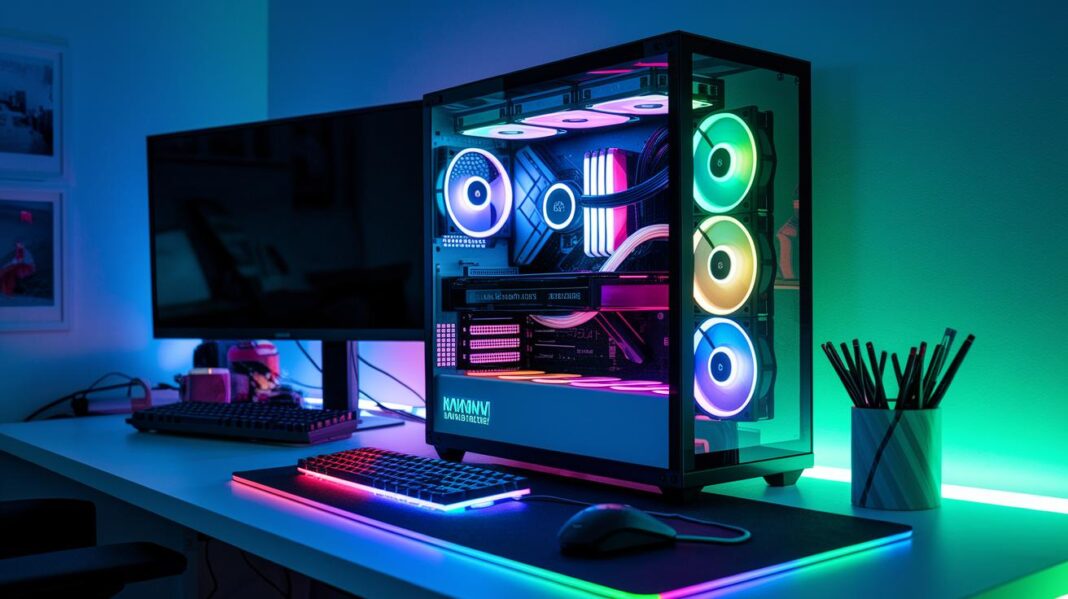

Ever wonder if a budget gaming rig can still pack a punch? Today, we're diving into desktops that give you great performance without draining your wallet. Imagine your computer as a team where every part syncs perfectly to deliver sharp images and smooth gameplay.
Whether you're rocking an entry-level setup for 1080p, a midrange system for impressively crisp visuals, or a high-end model ready to take on 4K, there's something for everyone. So, stick with us as we break down the best choices for your gaming needs.
gaming desktops: Stellar Performance & Value
When you're on the hunt for a gaming desktop, think about what you really need and how much you're willing to spend. Start by picking core parts that match both your game style and your budget. For example, if you're cool with crisp 1080p action without emptying your wallet, the MSI Codex R2 is a solid pick. It runs around $1,088.54 and packs an Intel Core i5-14400F with an RTX 4060 – perfect for smooth play on a budget.
If your goal is to get sharper visuals at 1440p, a midrange rig like the HP Omen 35L could be your new best friend. Priced at about $1,139.99, it features an AMD Ryzen 7 8700G and an RTX 4080 Super. This setup not only boosts your graphics but also keeps your system ready for longer gaming sessions and future upgrades.
Maybe you're dreaming of turning on 4K firepower. In that case, the Alienware Area-51 (2025) is worth a look. Coming in at $2,949.99, it boasts an Intel Core Ultra 9 285K, an RTX 5080, 64 GB of RAM, and a 2 TB SSD. It’s designed for gamers who crave the best visuals while keeping things nearly silent during those intense battles.
When you're weighing your options, remember to check CPU strength, GPU capability, RAM size, storage type, and even cooling efficiency.
Here's a quick breakdown:
So, keep these price brackets and specs in mind when choosing your next prebuilt gaming system. It all comes down to balancing cost with the power you need for your best gaming moments. Enjoy the ride!
Key Components Powering a Gaming Desktop

A gaming desktop is like a well-coordinated team where every part plays its role to deliver smooth and exciting gameplay. The GPU, for instance, is the graphics hero. Top-notch options like Nvidia’s RTX 40/50 series (or similar chips from AMD or Intel) make sure every visual pops and every frame flows smoothly. Some gamers even noticed that upgrading to an RTX 5080 turned choppy images into scenes filled with rich, lifelike detail.
The CPU, on the other hand, is your quick-thinking buddy. Whether you're rocking an Intel Core i5 or a beefier Core i9/AMD Ryzen 7–9, this chip is all about processing your commands fast and handling all those in-game tasks without a hiccup.
RAM is another key player. Sure, 8 GB is the basic requirement, but 16 GB or more makes your gaming sessions much smoother by helping with multitasking and faster load times. Some high-end rigs even boast 64 GB, ensuring that every texture, enemy, and explosion is ready when you need it.
Storage is just as important. A solid-state drive (SSD) cuts down on wait times, letting you jump straight into the game. With a 2 TB SSD, there's plenty of space for all your games, updates, and quick boot-ups.
Lastly, a quality 850 W power supply unit (PSU) is the unsung hero that keeps everything running. It not only provides steady power but also supports overclocking and future upgrades, ensuring your system stays ready even when you push it to the limit.
| Component | Role |
|---|---|
| GPU | Keeps your frame rates high and visuals sharp. |
| CPU | Handles game commands quickly and efficiently. |
| RAM | Aids in multitasking and speeds up load times. |
| SSD Storage | Minimizes wait times with fast boot-ups. |
| PSU | Ensures stable power and supports upgrades. |
Top Prebuilt Gaming Desktop Picks Across Price Ranges
The Asus TUF Gaming T500 is a small but mighty setup. It sports an Intel Core i7-13620H paired with an RTX 5060 Ti, perfect for those tight spaces where big desktops just don't fit. This rig slides into spots most would shy away from, all while powering through your favorite games. Just keep in mind that upgrading later might be a bit of a hassle.
Next up, the Falcon Northwest FragBox is a top-tier small form factor machine. It comes ready for RTX 5090 action and even has a three-year warranty to back you up. This sleek build packs high-end specs into a compact package that’s built for space-saving and high performance.
Then there's the Velocity Micro Raptor Z55a. Built to wow, it features a Ryzen 7 9800X3D, 64GB of RAM, and an RTX 5090, all for $2,174. Imagine a machine that rips through your favorite titles without breaking the bank. It’s a balanced powerhouse for gamers who crave serious performance and value.
Finally, the Lenovo Legion Tower 5 Gen 10 is aimed at midrange gamers. With an RTX 5070 under the hood, it handles today's games with ease. Sure, its design might make future upgrades a challenge, but for now, it’s a reliable desktop that gets you into the game from the start, even if tweaking later might feel like solving a puzzle.
Custom Builds vs Prebuilt Gaming Desktops
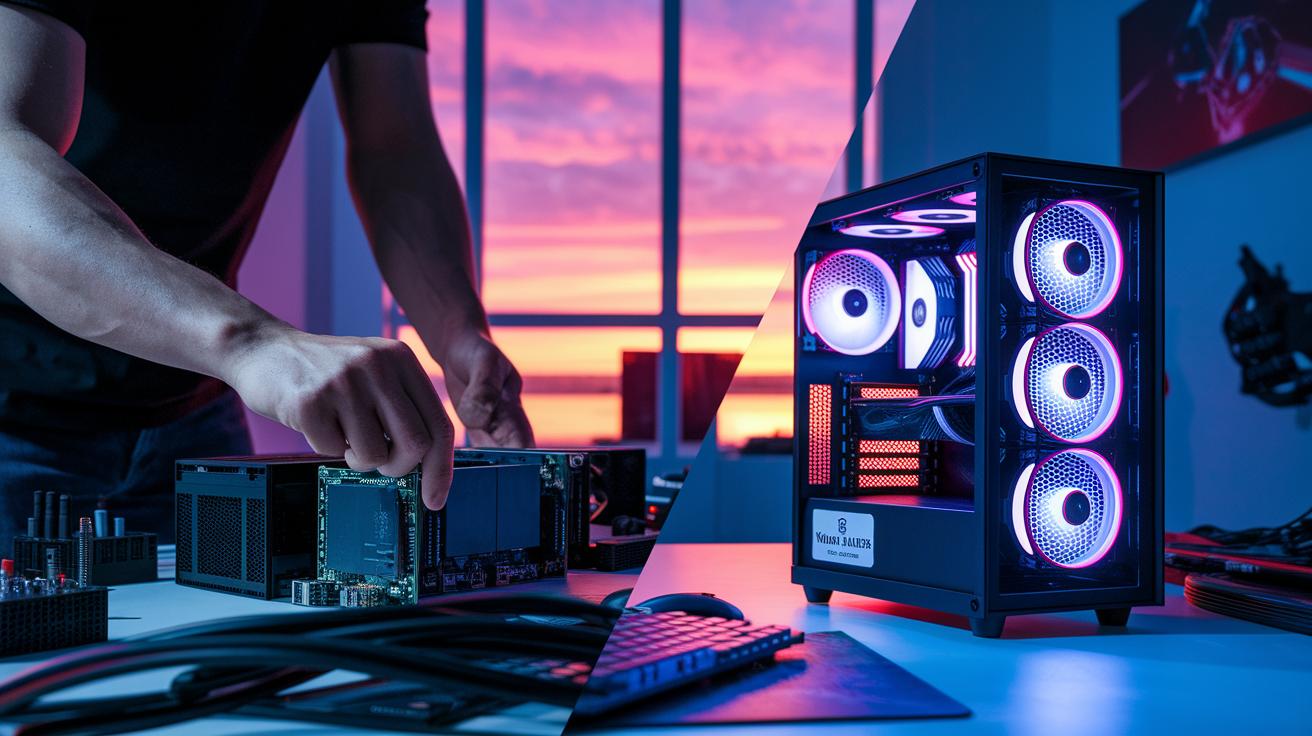
If you build your own PC, you pick each part yourself. It’s like choosing every ingredient in your favorite recipe. You get to decide on things like overclocking (making your processor run faster), liquid cooling (keeping things cool and smooth), or even swapping out your graphics card later. Imagine it as piecing together your very own puzzle where every piece matters.
Prebuilt systems, however, are ready to roll out of the box. They come with parts that are tested to work well together, plus warranties and easy plug-and-play set-ups. This means you skip the tricky bit of matching components and can jump straight into your games without any fuss. It’s a smart pick if you want to get started right away with solid, reliable support.
Custom builds let you play around with your setup and possibly save money in the long run, while prebuilt desktops promise stable performance straight out of the gate. So, think about what matters more to you: the fun of customizing every detail or the ease of an effortless start.
Ensuring Efficient Cooling in Your Gaming Desktop
Air cooling is a solid choice for many midrange gaming rigs. Most setups use basic fans and heatsinks to keep things cool and steady, making it a popular option for budget-friendly builds that still pack a punch.
If you have a high-end system like the Alienware Area-51, liquid cooling might be your best friend. These systems use liquid loops that lower temperatures even when the load is heavy. It helps keep your graphics card and processor chill, which can totally change the game when you're pushing your system hard. But remember, liquid cooling tends to be a bit more complex and costs extra compared to air cooling.
Compact models, like the Asus TUF Gaming T500, might get a bit warmer because of their unique designs. Even though designers work hard to keep noise down, tight spaces can make cooling less efficient.
In the end, your choice between air and liquid cooling comes down to your system and how quiet you want things to be. Liquid cooling lowers temperatures and dials down the noise, perfect for high-performance builds. On the other hand, air cooling remains a reliable and cost-effective solution for many gamers.
Future-Proof Upgrades and Longevity for Gaming Desktops
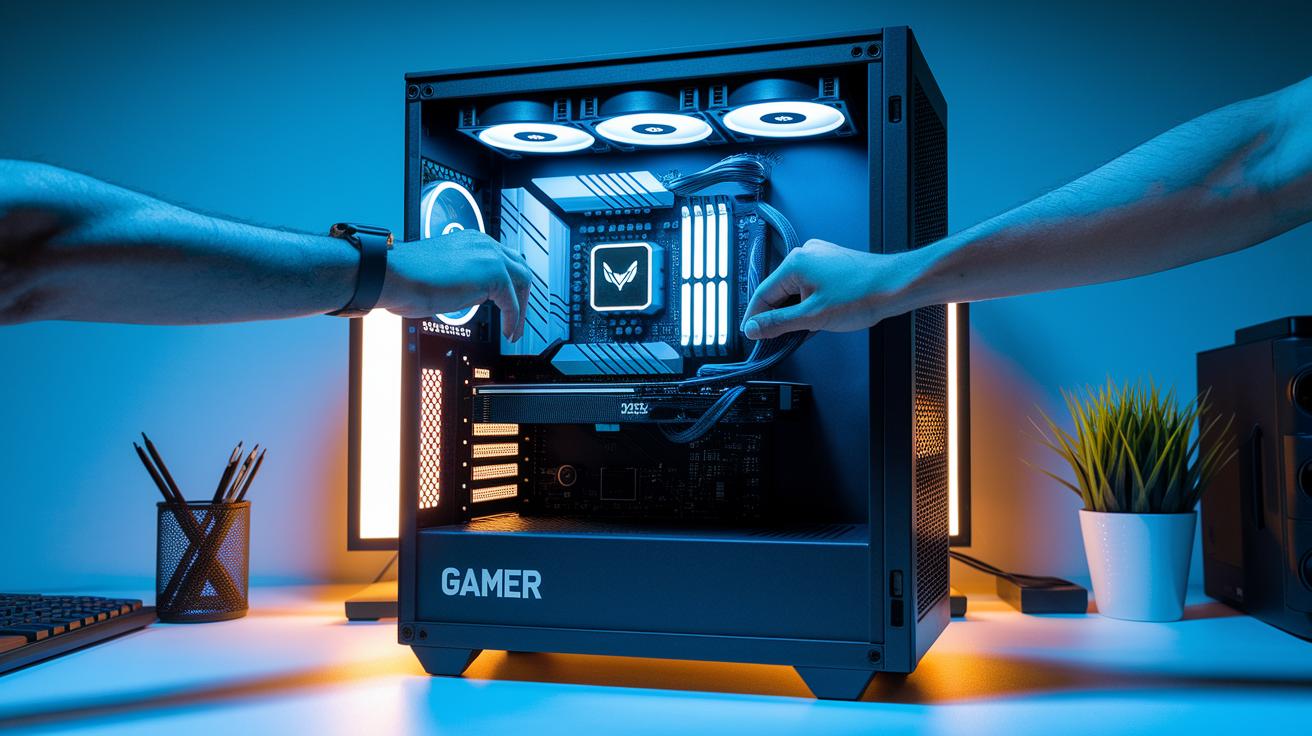
Building a next-gen gaming desktop is like planning for an epic raid, you want everything to be ready for future challenges. When you start out, picking the right case is key. Standard ATX cases, such as the Corsair Vengeance i7600, make it super easy to swap parts and leave plenty of room for cool upgrades.
Extra DIMM slots, M.2 ports, and PCIe x16 slots are like gear slots in your favorite RPG. They let you add new parts down the road without any hassle. Imagine a gamer sliding in new RAM like putting together a fun puzzle, where every piece fits perfectly.
An 850 W PSU is a must if you’re thinking long-term. It not only supports overclocking (pushing your hardware to run faster) but also powers future graphics cards. Think of it as the heart of your build, a steady beat that keeps your gaming performance smooth now and well into the future.
Your motherboard is your command center. Look for one with plenty of drive bays and connectivity options so upgrading your CPU or storage doesn’t feel like a chore. Sometimes, sleek, compact designs can hide important upgrade options. Choosing a standard form factor can save you a lot of headaches later on.
Upgrading isn’t just about swapping out parts, it’s about planning for many gaming sessions ahead. With a well-chosen motherboard, extra ports, and an ATX case, your rig stays light on its feet, ready for the newest tech while still delivering that awesome gaming experience every time you boot up.
Final Words
In the action, this post broke down how to choose the right gaming desktop. We covered the best options for every budget, from entry-level rigs to high-end machines, while pointing out core specs, cooling choices, and upgrade paths. You got a clear look at both custom builds and prebuilt systems. The guide gave you the basics to find a setup that fits your play style. Keep refining your setup and enjoy the thrill of leveling up your gaming experience!
FAQ
How do I set up a full gaming PC and monitor system?
Setting up a complete gaming system means pairing a strong gaming PC with a quality monitor. Check resolution, refresh rate, response time, and connectivity to enjoy smooth gameplay.
What are the best affordable gaming desktops under $1000?
Affordable gaming desktops offer solid performance for 1080p play with entry-level specs. Look for prebuilt systems that combine a reliable CPU and GPU with budget-friendly pricing for cost-effective gaming.
What should I know about custom gaming PCs and their availability?
Custom gaming PCs let you pick your own components and upgrade paths. Some vendors also offer customized builds for sale, giving you a system tailored to your specific gameplay and performance needs.
What are some options for high-end gaming desktops in 2025?
High-end gaming desktops in 2025 pack top-tier CPUs, GPUs, and advanced cooling systems. They deliver excellent performance, support overclocking, and often include innovative cooling methods for a quieter session.
What gaming PC offerings does Microcenter provide?
Microcenter supplies gaming PCs known for competitive pricing and in-store expertise. Their systems often feature balanced specs, making them a great choice to build an efficient gaming setup without breaking the bank.
What characterizes NZXT gaming PCs?
NZXT gaming PCs boast a sleek design and reliable performance. Their focus on excellent cooling and customization means you get a system that looks great and runs smoothly through long gaming sessions.
How do gaming PC payment plans work?
Gaming PC payment plans let you finance a new system over time. These plans normally require credit approval and offer a clear repayment schedule, making it easier to handle the upfront cost.
What should I consider when shopping for a gaming desktop?
When shopping for a gaming desktop, consider key components like CPU, GPU, RAM, storage, and cooling features. Match these with your gaming style and budget to find a system that meets your needs.